
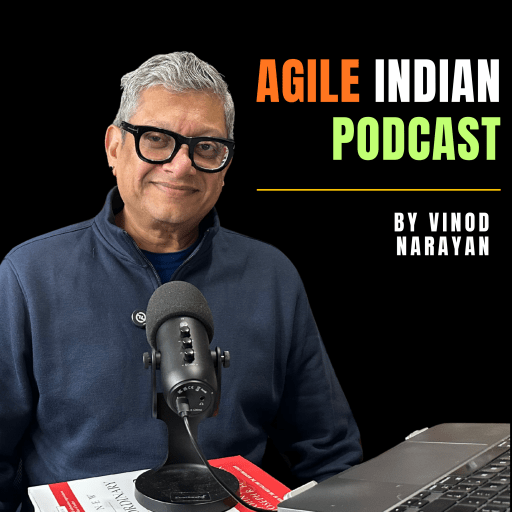
Being Indian today is not just about where we live. It is about how we think, adapt, and belong in a world that keeps shifting. Many of us work across cultures and move constantly between traditions and modernity. We are rooted in something old and familiar, and yet we are always adjusting to new expectations, new environments, and new ways of being. This blog, and the podcast that grows alongside it, is about that experience. I call it Agile Indian.
Agile is a word I use often in my professional life. It comes from the world of software, teams, and organizations. But agility as an idea is far older than any framework or methodology. It is about adaptability, about responding instead of reacting, about learning without losing yourself in the process. As Indians navigating a global world, we practice agility every day—often without naming it. We adapt our communication, our behavior, and sometimes even our identity, depending on the context we are in. Agility is not something we only learn at work; it is something we live.
Agile Indian is not a space to talk about Scrum, sprints, or ceremonies. It is a space to explore how Indians think, work, change, struggle, and grow, especially when we operate in global environments. Work will naturally be part of these conversations because it shapes a large part of our lives, but this is not limited to productivity or professional success. We will also talk about identity, pressure, belonging, silence, ambition, and meaning. Agility here is a mindset, not a methodology.
Many of us live between worlds—between cultures, between expectations, and between who we were taught to be and who we are slowly becoming. We are expected to adapt quickly, perform consistently, and remain grateful at the same time. We carry contradictions quietly and learn to navigate complexity without complaint. Often, we do this so well that we forget to pause and ask what this constant adaptation is doing to us internally. Agile Indian is meant to be that pause, a space to reflect rather than fix, to understand rather than optimize, and to notice both the cost and the value of this way of living.
Professionally, I work in the Agile space and spend my days helping teams and organizations adapt to change. Over time, I have come to realize that the hardest transformations are not organizational but personal. They involve identity, fear, belonging, and meaning—things no framework can fully address. This space is where my professional experience meets my lived experience as an Indian in a global context, where work and life stop pretending they are separate.
Going forward, each post and each episode will focus on one idea, one question worth sitting with, one pattern I have noticed, or one tension we rarely talk about openly. Some will be reflective, some practical, but all will be honest. There will be no motivation, no preaching, and no performance—just thoughtful conversations meant to slow us down, not speed us up. Agility, after all, is not about moving fast; it is about staying human while things change. If you are an Indian navigating a global world, this space is for you. This is Agile Indian.
 Agile Indian